
What Are Wisdom Teeth?
Third molars are commonly referred to as wisdom teeth. They are usually the last teeth to develop and are located in the back of the mouth, behind the second molars. Their development is usually completed between the middle teenage years and early twenties, a time traditionally associated with the onset of maturity and the attainment of wisdom.
Wisdom Teeth Presentation
To provide you with a better understanding of wisdom teeth, we have provided the following multimedia presentation. Many common questions pertaining to wisdom teeth are discussed.
What Is An Impacted Tooth?
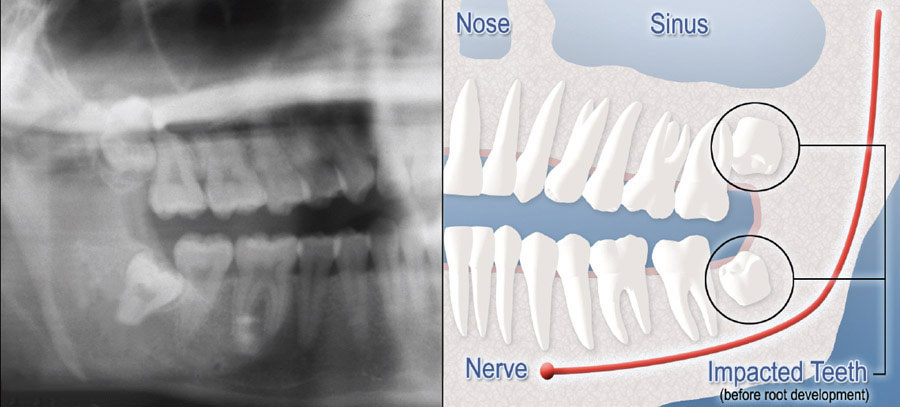
Although most people develop and grow 32 permanent adult teeth, many times their jaws are too small to accommodate the four wisdom teeth. When inadequate space prevents the teeth from erupting they are called impacted. This indicates their inability to erupt into the proper position for chewing and cleaning.
Types Of Impactions
We may elect to see a patient for a consultation to determine if they will benefit from wisdom tooth removal. A special x-ray, called a panorex, of the mouth and jaws may need to be taken to determine if the wisdom teeth are impacted, if there is room for them to erupt, and how difficult it will be to have them removed.
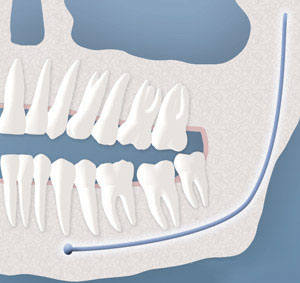
- Soft Tissue Impaction: There is not enough room to allow the gum tissue to retract for adequate cleaning of the tooth.
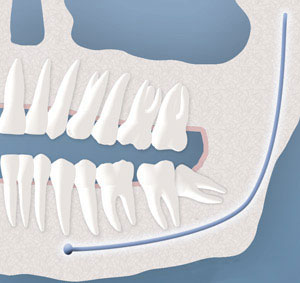
- Partial Bony Impaction: There is enough space to allow the wisdom tooth to partially erupt. However, the tooth cannot function properly in the chewing process, and creates cleaning problems, among others.
- Complete Bony Impaction: There is NO space for the tooth to erupt. It remains embedded in the jaw bone, or if even partially visible, requires complex surgical techniques for removal. The impacted wisdom tooth may also be in an unusual position and difficult to remove. This situation can also arise when the shape or size of the jaw bone and other facial structures make removal of this tooth significantly more complex.
 Soft Tissue
 Partial Bony
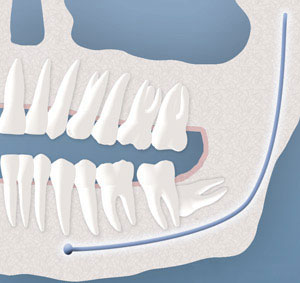 Complete Bony
Face & Jaw Surgery Center
Patient Review
A clean and neat facilty .Experienced Staff and Doctor Chagal thoroughly explained the procedure and pointed about the stages of it. Promptly done with the surgery earlier than the expected time. All kind of post surgery material is handed as well. Well done and keep it up .Would highly recommend.
- Sadia H
Patient Review
I really appreciated how comfortable they made me feel. It was nice that the nurse called my mom to see how I was doing. Everyone was very nice.
- Izhavel N
Patient Review
Dr. Gray and his team is amazing. I was super nervous but they answered all my questions which made me feel better. Everyone was extremely nice and understanding. I had to get ahold of Dr. Gray over the weekend for pain and he texted me since the office was closed. And I had to go in a second time for dry socket since the pain medicine wasn’t working. He put the dressing on the bothersome tooth and I felt instantly better even though it tastes gross! Dr. Gray and his team listened to my concerns and let me decide what measures I wanted to take for my healing. They are a very respectful team! I am super impressed with them. I am currently still healing but so happy with Face And Jaw. Thank you!
- Asia R
Patient Review
They did a great job And caring about there Patience
- Brian G
Patient Review
If I need anymore teeth pulled or dental work that requires me to be put under I will definitely be back! 10/10 for patient care.
- Shelby C
Patient Review
Everyone was great and caring. It’s hard to go into a situation that tends to come with high anxiety and then let them sedate you and still be made to feel comfortable. Even with all the Covid protocols it was good.
- Lauren N
Patient Review
I had a pleasant experience on a not so pleasant task. I thank all of you for a totally professional and pleasant experience.
- Wayne P
Patient Review
I had been trying to get my last two wisdom teeth out for the past 3 years. I 've always been extremely anxious and somewhat terrified about doing the surgery all over again. I'll admit I cancelled a few times. I was very nervous that morning, but as soon as I walked in at the Bismarck location, I became less tense. The lobby was calm & relaxing. I loved the fireplace and there was a good view from the 3rd floor windows. The staff was welcoming, friendly and professional. The nurses knew what they were doing. Dr. Knoll was also friendly and professional. He explained eveything clearly and answered my questions. I was hooked up to machines with ease and put to sleep right away. He told me my wisdom teeth were like regular teeth, so he pulled them out and there was no need for stitches or medication. I can't believe the procedure only took 30 minutes. I arrived 7am (mountain time) and left by 8am. A couple of days have gone by and I am just so relieved that Face & Jaw was available in Bismarck. I would certainly go back...the whole experience was great. Thank you!
- Ann R
Patient Review
I went to the Fargo location for wisdom teeth extraction, and I am sorry to say I have no memory for names so I can't give the credit I wish I could to the individuals. I do not like needles and have never been put under anesthesia prior. I'm also prone to fainting symptoms with medical procedures. The receptionists were friendly and patient. When I was taken to the back (10 minutes early even since I arrived early) the woman was kind and listened to my concerns. The anesthesiologist listened to my concerns about needles since my veins tend to disappear and I had to fast (including water) before the surgery and she even got the IV in the first time and I dare say it was the least painful one I've ever had done. The doctor took good care of me even when I started feeling faint and had to lie back and cool down. After the surgery, the ones monitoring me were kind and helpful even after I threw up the medicine they tried to give me and gave me plenty of time to recover. I am very happy with the service I received. It was well worth the cost!
- Samantha D
Patient Review
There is not one thing I would have changed to make my visit any more pleasant. The many assistants that prepped me were all very attentive to my needs. Each wanted me to understand completely what would be happening. They all repeatedly checked with me to see if I had questions. The doctor also took time to explain what he would be doing and told me to let him know if there was pain and when there would be pressure. It was overall a much more positive experience than I ever anticipated. I would be happy to recommend this office highly to anyone needed to have oral surgery. Excellent treatment and care. Thank you. Josie
- Josie P
Patient Review
The service is great, the staff is very friendly. I would definitely recommend Face and Jaw Surgery Center.
- Madison D
Patient Review
I saw dr. crago years and years ago in 2002 and i really couldn’t afford my bill but you all were so awesome and said even if i paid $5 a month that would help. even after i moved to alaska and didn’t always pay on time you all were awesome and understanding. dr. crago did an amazing job that i was talking and eating like normal and had very little pain.
- kristin c
Patient Review
every staff member I encountered was kind professional and I honestly felt like I was being treated like family. I know its a big cliché to say that but truly was a great experience.. i 100% recommend this company.
- joshua c
Patient Review
My dental assistant was the BOMB.COM! I'm not talking about the nurse. I'm talking about the dental assistant actually I guess she was a surgical assistant. She was very friendly and cool. Going into this I thought I was going to be nervous, but I wasn't! I felt very comfortable and safe and had no worries! I just hope that I was polite afterwards when they woke me up. I don't remember, but my mom says I was so I hope she was right! I'm so sorry if I made anything difficult because you guys sure didn't make anything difficult for me. You guys were AWESOME!!!!!!!!! (MIC DROPPPP)
- Destiny D
Patient Review
They did an excellet job, I only had the most pain on the first day of recovery otherwise the staff was friendly and very helpful.
- Gunnar P
Patient Review
Dr. Chahal was very reassuring, all staff were very friendly, knowledgeable and caring.
- Carter O
Patient Review
I was treated with respect by all. Procedure was done quickly with very little pain. I must say it was a very good experience in what professional courtesy ought to be, 1. explaining procedure and after care. 2. Doctor and Assistants spent time visiting with me in casual topics,Weather, Sports and Families etc. I was not left alone for any length of time. God bless all Mike Dorsher
- Mike D
Patient Review
Going to the doctor is never a great experience but the folks at Face and Jaw went out of their way to make this tooth extraction as comfortable as possible.
- William G
Patient Review
I have not had any issues since surgery other than some undetermined reaction on the left side of my face (emergency room doctor was perplexed but an iv of steroids and an antibiotic solved it). The doctor was great at explaining everything that was going on. The procedure was very quick and I was on my way home in less than an hour. I am on the mend and happy with my procedures. Would go there again if needed!
- KATHERINE S
Patient Review
Great experience under the circumstances
- Kevin H